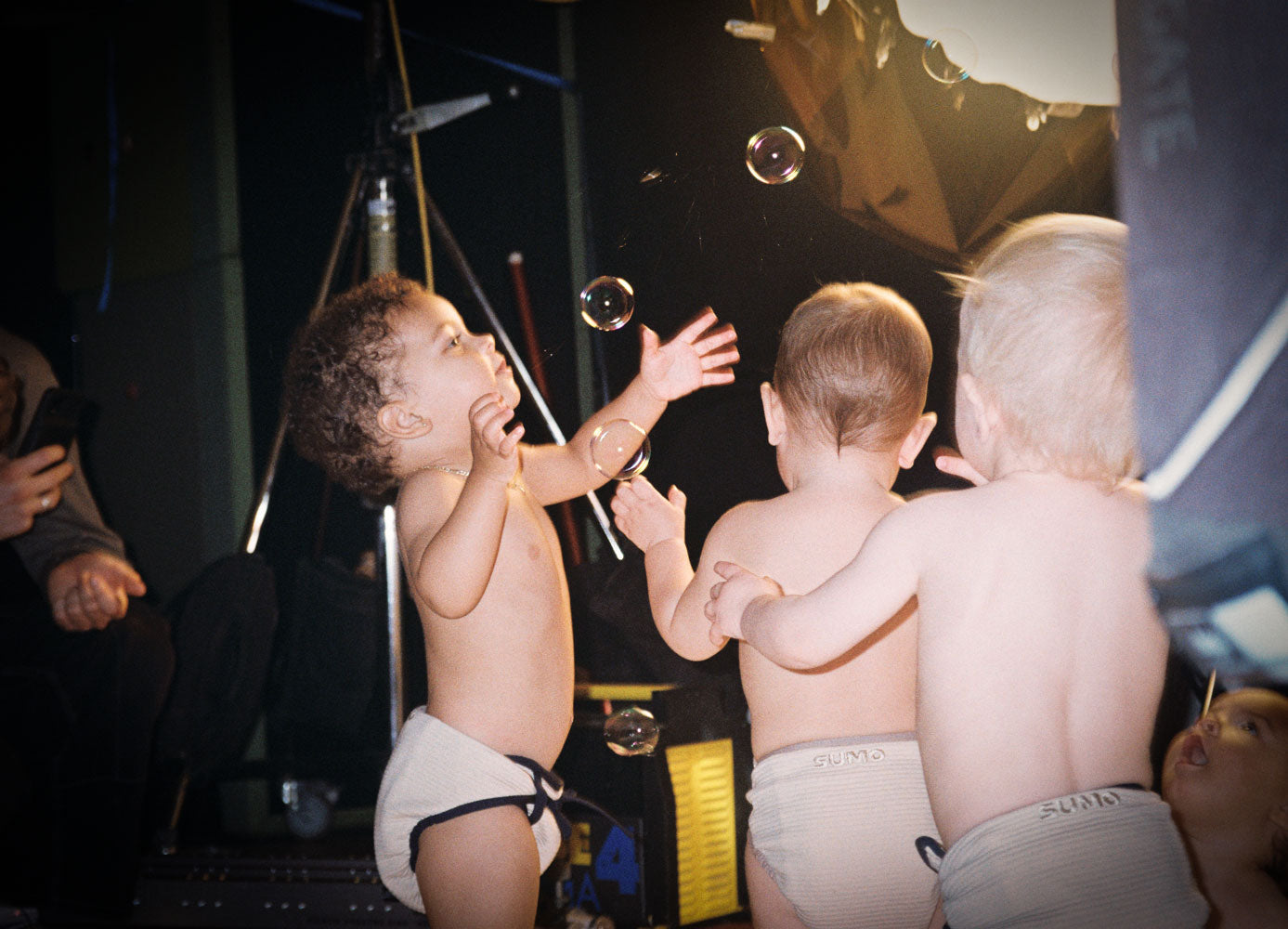
The question "When will my child finally be dry?" is a frequent concern for parents. This is also when many start thinking about potty training. The short answer: there is no fixed time - every child has their own pace. Most children become dry during the day between the ages of two and three, some earlier, some later.
Many parents are unaware that the choice of diaper type can have an impact on learning behavior during potty training. Many modern cloth diaper systems are designed specifically to support this learning phase. Children who are changed in cloth diapers often develop an awareness of their excretions earlier. This can make the journey to the potty much easier and speed up the learning process.
In this article, you will find out when children are developmentally ready to go dry, what signs indicate that they are ready to go, what role cloth diapers play in this and how you can support your child gently and without pressure - for the most relaxed transition possible.
Reading time: 8 minutes
Getting Dry: When Children Are Developmentally Ready
Becoming dry is first and foremost a maturation process. Before a child can control its bladder and bowels, certain nerve pathways between the brain and the corresponding organs must be developed. This happens in most children between the ages of 18 and 24 months. Only then can your child even perceive that the bladder is filling up or that it "has to".
Bowel control usually develops a little earlier than bladder control - which is why the first successes on the potty often come with the "big business".
Typical Time Frames
- 18-24 months: First physical requirements are given
- 2-3 years: Most children become dry during the day
- 3-5 years: Getting dry at night often takes longer
- Up to 5 years: Occasional wetting is still considered normal
On average, girls become dry a little earlier than boys - but this is also only a tendency, not a rule.
Why Sphincter Maturity Is Crucial
In order for children to become truly dry, they need more than awareness of their bladder and bowels. The sphincter muscles (for urination and defecation) and control of the pelvic floor must also be physically and neurologically mature. Reliable control is only possible once these muscles can be consciously tensed and relaxed.
Without this physical maturity, potty training can also fail - even if there is interest.
This physiological maturation explains why many children only become reliably dry during the day at around 2 to 3 years of age (sometimes later). And why regression or difficulties are not unusual: Muscle and nerve coordination develops step by step.
How To Tell When Your Child Is Ready For Potty Training
Your child's behavior will show you when it's time. Watch out for these signs:
- Your child stays dry for a long time (two to three hours)
- It shows interest in what mom, dad or siblings are doing on the toilet
- It lets you know when the diaper is full and wants to be changed
- Can understand and follow simple instructions
- Can sit down and stand up again independently
- Resists being changed ("diaper fight")
Early potty training - i.e. constantly putting the child on the potty before it shows these signs - does not speed up the process of becoming dry. Studies show that this does not make children nappy-free any sooner.
Cloth Diapers And Wetness Feedback: How They Support The Learning Process
Here's where it gets interesting: there are good reasons to believe that cloth diapers can make the journey to the potty easier. And this is due to a simple principle - wetness feedback.
Wetness Feedback: The Decisive Difference
Disposable diapers are designed to feel dry even when the bladder is full. The chemical absorbent core - a so-called superabsorbent made of polyacrylate - is so extremely absorbent that it immediately turns liquid into gel. The result: a full diaper hardly feels any different to an empty one. It simply doesn't get any feedback that it has just had a wee.
This is precisely where the problem lies for the learning process: the natural connection between "I've had a wee" and "Now it's wet" is completely interrupted by the high-tech suction power. The child cannot develop an awareness of when its bladder is full and when it is emptying - because it simply cannot feel the difference.
This is different with cloth diapers: the child can feel when it is getting wet. It receives direct feedback from its body. This conscious awareness - "I've just had a wee" - is an important building block on the way to bladder control. The learning effect can begin because the natural cause-and-effect chain is maintained.
A Look Into The Past
An interesting fact: in the 1950s, when almost all children were diapered with cloth diapers, about 95% of children were potty trained by 18 months. Today, in the age of disposable diapers, most children don't get dry until an average of 28-36 months.
Of course, other factors also play a role - but the correlation is remarkable.
What Parents Report
Even if there are no large-scale scientific studies on the subject, the experience speaks for itself: many cloth diapering families report that their children show interest in the potty earlier and that the transition is smoother. Some children who were changed in cloth diapers are already largely dry before their second birthday.
Even parents who previously used disposable diapers can switch to cloth diapers or training underpants during the transition phase. The increased feeling of wetness can also help to heighten body awareness later on.
Tips For Gentle Potty Training: How To Accompany Your Child
Whether using cloth or disposable diapers - these tips will help your child on the way to becoming diaper-free:
1. Do Not Build Up Pressure
First things first: you can't force yourself to become dry. Pressure and stress delay the process rather than speeding it up. Stay calm, even if it takes longer or there are setbacks.
2. Be A Role Model
Children learn by imitation. Let your child see how you or older siblings use the toilet. Explain naturally what is happening.
3. Introducing The Potty Early
Provide a potty and let your child become familiar with it - without expectations. They can sit on it, play with it and examine it. This way, it becomes a normal object in everyday life.
4. Seize The Right Moments
Offer the potty at convenient times: after waking up, after meals or when you notice that your child "has to" (restlessness, going into a corner, grimacing).
5. Celebrate Successes - Ignore Failures
Praise every little bit of progress - but don't make a drama out of accidents. A relaxed approach takes the pressure off and encourages your child's natural motivation.
6. Choose Practical Clothing
Pants that are easy to pull up and down give your child more independence. Complicated buttons or zippers can be frustrating if you have to do things quickly.
Cloth Diapers vs. Disposable Diapers: The Comparison For Getting Dry
| Aspect | Cloth diapers | Disposable diapers |
|---|---|---|
| Feeling of wetness | Child feels wetness directly | Stays dry thanks to superabsorber |
| Body awareness | Is encouraged | Less pronounced |
| Change frequency | More often (promotes routine) | Less often necessary |
| Motivation to get dry | Higher through wetness feedback | Diaper feels comfortable |
| Transition phase | Trainer underpants available | Pull-ups feel similarly dry |
Trainer Panties: The Bridge Between Diaper And Underpants
Special cloth diaper training underpants are available for the transition phase from diapers to underwear. They combine protection against minor accidents with the important wetness feedback that children need to become more aware of their bladder and bowels. This helps them learn to use the potty step by step.
How Fabric Trainers Work
- They feel like normal underwear, but have a light absorbent core that reliably absorbs small amounts of urine.
- At the same time, the child consciously feels the moisture as soon as they pee.
- This clear feedback - "I've wet myself" - promotes body awareness and motivates them to go to the potty on time.
- Many children also love to pull their trainer underpants up and down themselves. This encourages independence and gives them the feeling of being "big".
Pull-Ups (Disposable Trainer Panties): Do They Work The Same Way?
Many parents turn to disposable pull-ups during the transition phase and wonder whether they have the same learning effect as cloth training underpants.
The clear answer: usually no. Just like conventional disposable diapers, pull-ups are made of highly absorbent superabsorbents that immediately convert liquid into gel. As a result, the surface often feels almost dry, even if the underpants have already absorbed quite a bit.
Some brands advertise with "moisture indicators" or a briefly damp surface. In practice, however, parents often report that pull-ups feel almost as dry as diapers, especially when they have absorbed more liquid.
The result:
- Hardly any wetness feedback
- Less body awareness
- Less motivation to go to the potty on time
This is exactly where fabric training underpants have their greatest advantage.
Tips For Parents
- When to use: Ideally when your child shows the first signs of readiness (longer dry periods, interest in the toilet, resistance to changing).
- How often to change: Trainer underpants should be changed immediately after an accident - the wet feeling is deliberate, but wearing them for longer would be uncomfortable.
- Choice of material: Soft, breathable natural materials such as organic cotton or lyocell are particularly comfortable for the skin.
- Ease the transition: Trainer underpants are great as an intermediate step from diapers to regular underwear. The routine of pulling them up and down teaches independence and strengthens body awareness.
FAQ
When is a child ready for potty training?
Readiness signals are, for example, longer dry spells, interest in the potty or in what adults do on the toilet, as well as announcing wee-wees or bowel movements. If your child shows several of these signals, it's a good time to start.
How long does it take until a child is completely dry?
The process of becoming dry is very individual and depends on the child's stage of development. Some children become dry during the day within a short time of starting the process, while it takes longer for others. Relapses are part of the process and are completely normal. Becoming dry at night is a separate developmental stage and can occur much later.
How can I motivate my child to use the potty?
Pressure or coercion usually delays getting dry. Children learn best in a relaxed, positive atmosphere in which they feel safe and understood. Instead, rely on playful support: make the potty easily accessible, look at books together and be happy about small successes. Give your child time and space - and if they show clear resistance, a short break of a few weeks often helps.
Do cloth diapered children really dry earlier?
There is strong evidence from experience reports and historical comparisons that cloth diapered children often develop an awareness of their excretions earlier. However, large-scale scientific studies on this are still lacking. What is certain: The wetness feedback with cloth diapers supports body awareness, and this is an important basis for becoming dry.
My child is three and still wearing diapers - is that normal?
Yes, absolutely. There is a huge range when it comes to getting dry. Some children are nappy-free at the age of two, others take up to four or five years. As long as there are no medical causes and you don't put any pressure on them, everything develops at its own pace. The World Health Organization only speaks of "wetting" from the age of five if a child is not yet dry.
Can I still switch to cloth diapers when my child is older?
Yes, it's actually a popular strategy! Many parents report that switching to cloth diapers or trainer underpants has been a breakthrough during the transition phase. The increased feeling of wetness can also help older children to become more aware of their own excretions.
What do I do if my child is not yet dry at night?
Nocturnal wetting is a separate developmental stage and often takes longer than daytime wetting. Until the age of five, occasional wetting at night is considered completely normal. Reduce drinks about an hour before bedtime and let your child go to the potty again before going to bed.
What should I do if my child regresses?
Regressions are completely normal - e.g. during developmental leaps, starting nursery, the birth of a sibling or stress. Deal with this in a relaxed manner and return to the previous step (e.g. remind yourself more often or use training underpants).
Conclusion: Patience And The Right Diapers
Getting dry is a milestone that cannot be accelerated - but you can create the best conditions. Cloth diapers made from breathable materials such as organic cotton or lyocell offer your child natural wetness feedback that promotes body awareness.
Ultimately, every child dries at their own pace. With patience, loving support and the right aids, you can make it as easy as possible for your child.
Sources
- How to potty train (NHS, 2024)
- Wann werden Kinder trocken? (AOK Gesundheitsmagazin, 2022)
- Toilet Training (American Academy of Pediatrics, 2024)
- Toilet Training (Johns Hopkins Medicine)
- Development of intestinal and bladder control from birth until the 18th year of age (Zurich Longitudinal Study)
This article is part of SUMOPEDIA — SUMO’s parenting magazine. Discover reliable advice and practical tips on baby care, diapering, and sustainable family living.